best selling author
Barbara Charles Pement
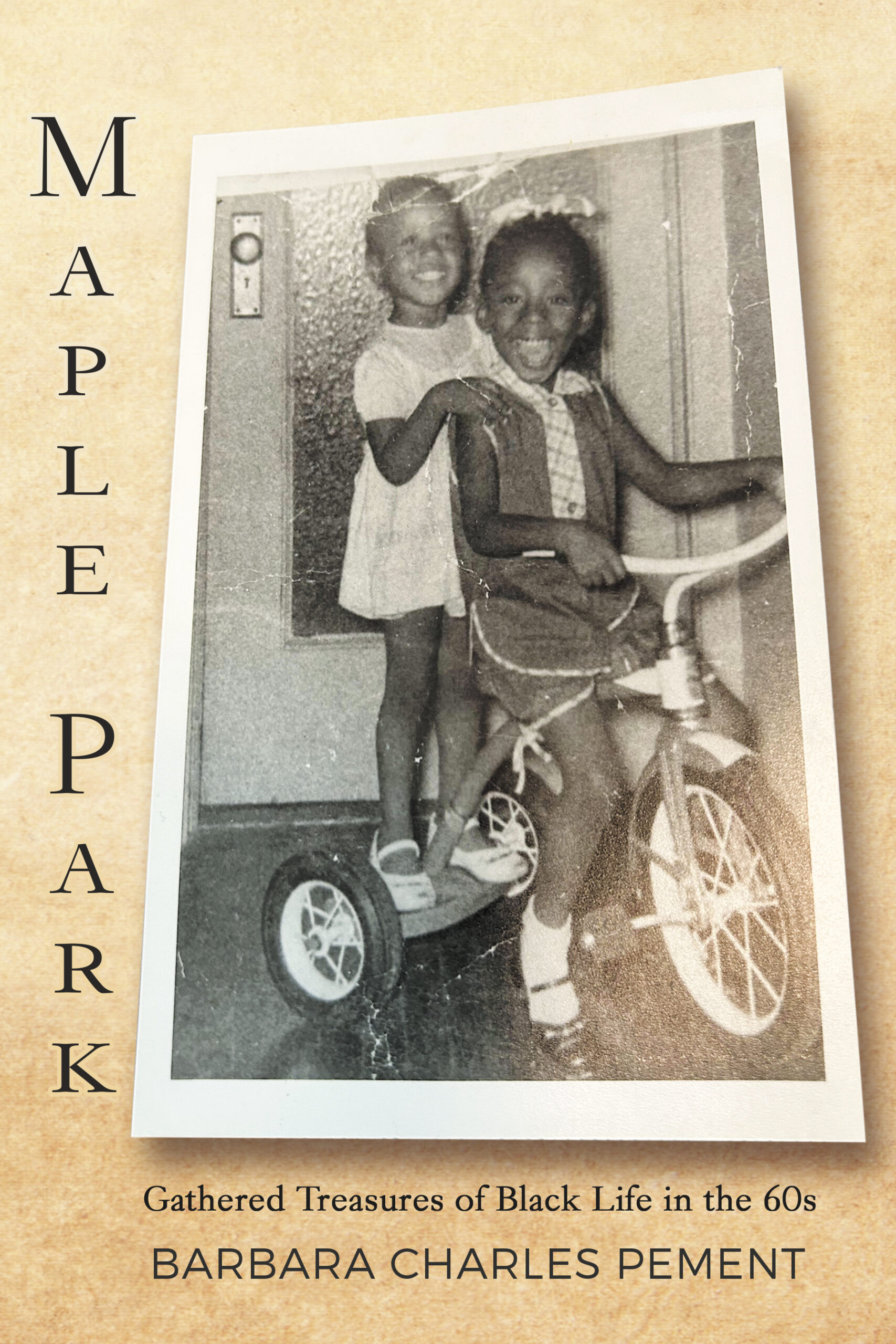
We were the African American version of the perfect white families we saw on television: we were Mayberry. We were Leave It to Beaver. We were Lassie. Though some days in the Charles household, we were even Bonanza.
Barbara Charles Pement, Author of “Was…Was That Jesus? 23 Years in a Jesus Commune” is a married mother of three, grandmother of three and former Battle Creek, Michigan ABC Continuity Director. Barbara grew up on Chicago’s Southside in Maple Park, Chicago’s first African American homeowner’s neighborhood erected from the ground up. She is a former Chicago Senior Editor of Cornerstone magazine and is currently a Bible Study Fellowship Children’s Leader and Ratio Christi Activist on the University of North Florida campus.
9 Published Articles
Humboldt Park private school stirs hope in lives of underserved students in 2012
“How do you do it? How do you make a difference in school children’s lives in one of the roughest neighborhoods of Chicago?”
Humboldt Community Christian School principal Debra Flores has the answer: through Jesus Christ.
“Our school is unique for a few different things. I didn’t actually find out until about 15 years ago when I tried to place my son in a Christian high school. Almost all other Christian schools make you sign or affirm that you or both parents are Christian. Our school has never done that.
“We are a Christian school and of course want the parents to be Christian and teach the kids that. We know the reality is that a lot of people are unchurched and so our school has always been more evangelical. Children who are hearing about the Lord, coming to the Lord – bringing it home -- the godly principles. We think that is what makes it (the school) work. God gave us that mission of being also for spreading the Good News and that’s part of what we do.”
Flores goes on to describe the major tenets that are the school’s strong stand-bys, calling them the three ABC’s of HCCS: 1. Academic excellence 2. Biblical truth and 3. Cultural sensitivity and appreciation, which is another distinctive feature.
“The children were almost all Latino, mostly Puerto Rican, some African American, and they found themselves so discriminated against in the public schools, which all the ones around here were the worst and still are not doing well. So it was also to have children who could be treated wonderfully and fairly and with care and appreciating that God made a diverse group of people: none of us think the same, look the same or act the same. That’s something to revel in, not be afraid of. So those facts really make it work.”
Flores says it is the biblical integration of all things throughout the day that makes the difference, not just a morning bible subject or a little prayer tagged on at the end of the day or during meals. Humboldt Community Christian School has a core curriculum in every subject, textbooks and many resources.
Though in the last ten years, the gang and drug infested community has had some improvements in the area, HCCS has become a safe-haven, providing a nonthreatening place of security thus ensuring an environment that encourages surpassing academic achievement. HCCS is chosen many times by parents because they feel safe and the family oriented atmosphere is untainted.
High-powered ways of fundraising to keep the school in good financial straits have never been successful. Flores credits the school’s 31-year prosperity due to the gifts, donations, and amazing endeavors orchestrated by God himself. Monies even came from President Obama himself. “We weren’t expecting that,” admits Flores. The tuition at HCCS is lower than any private school anywhere else; many of the families come from distressful situations: single or widowed parents, divorce, various domestic issues; most are not financially well off.
Yet HCCS is able to provide quality private education to those least able to afford it.
“We won’t have all the bells and whistles, like for instance what a Cadillac offers as opposed to a Honda Civic, but we offer a quality education. We will get you where you need to go.”
“The parents see what it means to the kids. They usually come to us from public schools in desperation. We see progress.”
Students come from not just the Humboldt Park area, but arrive from all over the inner city and suburbs: Elmhurst, Franklin Park, Maywood, Berwyn, Woodridge, Oak Lawn, Cicero, and Skokie.
Housed in the large Bethany Presbyterian Church along the attractive boulevard of Humboldt Avenue, Flores tells how the building was acquired in 1980, the mortgage paid off, and in existence making a difference in young people’s lives from preschool through 8th grade since 1983.
Rachel, the receptionist has a sweatshirt, folded over her chair, displaying a message that expresses it all clearly:
“Your people will rebuild the cities that were destroyed long ago. And you will build again on the old foundations…city streets like new again” Isaiah 58:12
Devilish performance of The Screwtape Letters captivates Jacksonville audience
“‘Indeed the safest road to Hell is the gradual one–the gentle slope, soft underfoot, without sudden turnings, without milestones, without signposts.’ Your affectionate uncle, Screwtape.”
Thus dictated the infamous words of the Master Demon before a packed Moran Theatre audience who responded enthusiastically March 9th last Saturday evening to the onstage interpretation of the C S Lewis classic The Screwtape Letters the collective correspondence between mentor and mentee on the best strategies useful to undertake in the undermining of the human race and the eating of souls.
Sponsored by the Fellowship For The Performing Arts, The Screwtape Letters began its National Tour three years ago covering over 50 major cities throughout the US captivating audiences with the live adaptation of the 1942 epistolary novel penned by celebrated essayist/Christian apologist Clives Staples Lewis.
For those unfamiliar with the plot, Screwtape is an elder demon instructing his nephew Wormwood on the fine arts of subduing his victim, a British subject referred to as “the patient.” Wormwood is in training. God is the Enemy who must be avoided, and thwarted at all costs. Wormwood is on the frontline of battle. If Wormwood would simply follow directions suitably all would be lost…the intended purpose, of course. Should he fail during this phase of his internship, the results will be quite disastrous for him, although the audience is unaware of the horrific outcome until the very conclusion.
The series of letters are brought to life as Screwtape messages his protégée with words intending to encourage the demise of his given assignment while giving us, the audience a rear window look into the dastardly methods prescribed from the demoniac’s point of view.
“It is funny how mortals always picture us as putting things into their minds: in reality our best work is done by keeping things out,” says Screwtape as he strolls across the stage. He pauses to reflect a little bit later to Toadpipe who is dutifully taking copious notes, “Do not be deceived, Wormwood. Our cause is never more in danger than when a human, no longer desiring, but still intending, to do our Enemy’s will, looks round upon a universe from which every trace of Him seems to have vanished, and asks why he has been forsaken, and still obeys.”
Selective musings such as these from Screwtape as he dictates to his minion, Toadpipe, the faithful groveling assistant, not only causes laughter amongst those seated in the playhouse, it also gives pause – for a sobering afterthought.
The fascinating well-spoken prose by award-winning actor Brent Harris, who played Scar in the National Tour of The Lion King, along with the interaction of Toadpipe, well performed by Marissa Molnar of the NYC: Broken Box Mime Theater entertained and delighted those whose thunderous applause and standing ovations at the climax of this two-demon show echoed throughout the theater.
The performance was followed by a question and answer period in which those deciding to linger afterward were given the opportunity to ask both actor and director pointed questions about their production.
“Given the growing hostility toward Christianity in our society, how do you account for such dramatic success?” an audience participant posed.
“We measure success in different ways. And we choose really excellent actors,” responded Max McLean, Artistic Director who created the role of Screwtape at Westside Theater in New York; Mercury Theatre, Chicago and Shakespeare Theatre in Washington, D.C. McLean is also famous for the one man presentation of Mark’s Gospel.
Although written over 70 years ago, The Screwtape Letters is amazingly contemporary using skilled artists acquired from all backgrounds and levels of expertise.
“We don’t ask people what their faith walk is. We realize that everyone in the audience does not think the same way. We employ Jews, Muslims, Christians, Middle Easterners; we choose the best of whomever is available.”
Sight gags and wit cleverly infused throughout The Screw Tape Letters make for an enjoyable presentation with perhaps a reading enticement for those unfamiliar with C S Lewis works. Its tour this year continues onward to Salt Lake City, Lincoln, Nebraska; Modesto, Glendale, California; Colorado Springs, and Minneapolis, Minnesota, to name a few. March 14, 2013
Florida Diversity Council discuss best practices in the hiring process
• Published on August 6, 2017
In a well-attended symposium, meeting the challenges of the changing work force was the primary focus of the Florida Diversity Council’s best practices discussion a week ago August 2, 2013. Presentations by Diana Sorfleet, Vice President and Chief HR Officer of the Chessie System Railway and the Seaboard Coast Line Railroad (CSX) and Ben Hawkins District Manager of Walgreens were informative and engaging.
Their thought provoking remarks were accompanied by power point illustrations showing the statistical changes in the racial and age demographics that are impacting the workplace and giving them the opportunity to implement diversity calls to action.
CSX Corporation is one of the nation’s leading transportation suppliers providing rail based transportation services including traditional rail service and the transport of intermodal containers and trailers. Its network of 21,000 miles of track covers 23 states, the District of Columbia and the Canadian provinces of Ontario and Quebec.
In her talk extolling the corporation’s continual inclusion practices within to meet the progressive changes in society, Sorfleet pointed out the need for the work place to reflect the community. She gave examples of improvements in CSX’s diversity and inclusion performances such as providing safety gear made to fit women in the field and promoting from within the ranks. In comparing growth trends among the Baby Boomers, Generation X’ers, Millennials and Traditionalists she concluded that by 2020 Millennials will represent 50 percent of the workforce. In 2045 the largest minority in the nation will be Hispanic.
Ben Hawkins, who is District Manager over 41 Walgreens establishments, spoke of the value brought to an organization when employees are retained. Walgreens which began in 1901 in Chicago by Charles R. Walgreen from Galesburg, Illinois is the largest drug retailing chain in the United States with 8300 stores in all 50 states, Puerto Rico and Guam.
In addition to discussing strategies for promotion and diversity in upper and middle management positions, Hawkins described the newest trends in upcoming Walgreens’ improvements, citing the experimental model Chicago store on State Street that exemplifies 2 floors of appealing accessories: a Wellness Center, a hair salon, an ice-cream and sushi bar, along with many other additional luxuries to attract customers. Both guests discussed and responded to questions regarding some of the difficulties of recruiting and retaining employees over the long haul and the perks they provide to maintain that coveted loyalty.
Former incarcerated mom steers vision to help other moms with a criminal past
Mother’s Day can be the loneliest time of year for an incarcerated mother which is why Leslie’s Place, a safe haven and rehabilitation home for former female inmates has become one of the most rewarding and successful transitional bedrocks for women who’ve been separated from their children.
Located on Chicago’s Westside, for nearly 15 years, Leslie’s Place has helped over 500 women coming out of prison to become reunited with their children and families. They’ve learned how to bridge the brokenness of their lives and break the recidivism cycle through the definitive measures of Support Advocates for Women, the functioning arm of Leslie’s Place.
Brown understands what it means to be separated from her children. She recalls her own life’s story and how it inspired her desire to help others by opening up her own home to former jailed female inmates.
“My first day back at work after maternity leave I found myself sitting at the Cook County Jail,” recalls Brown remembering how it all started several years ago --when she received a 20-year sentence for conspiracy to commit murder -- a last ditch effort to escape a nightmarish life of years of violent domestic abuse which resulted in her involvement in her husband’s murder.
“All I could think about was who’s going to take care of my children. My baby boy was 6 months old. The other son was a year and a couple of months. The son before him was four; my daughter was three. I had an eight year old and an eleven year old at home. So I had to think about ‘who’s going to take care of my children? Who’s going to be there at night to put them asleep?’ And it became so heavy on me—so heavy—that I contemplated suicide. I remember running from Reverend Octagon when I first got there. She used to say, ‘There’s just something different about you. I want to talk to you. Let me tell you about God.’ I was so angry so bitter I didn’t want to hear about God and no one else. So I use to run from her.
“Then after being there for one month, the Lord told me ‘get up and go in your room.’ I remember I was sitting in the day room. I went in my room and the Lord began to speak to me as though He were right there in the room. And he said, ‘Leslie let not your heart be troubled you believe in God believe also in me. In my Father’s house there are many mansions. If it were not so, I would not have told you.’
“He said ‘I go to prepare a place for you that where I am ye may be also.” He allowed my whole life to flash before me. He showed me all the times that my husband had tried to kill me. He showed me where my husband had tried to throw me off the 3rd floor porch. He said, ‘Leslie I was there.’
He showed me when my husband tried to stab ME, but instead he stabbed my coat. He said, “Leslie, I was there.” He showed me when my husband hit me in the head with the pipe. He said, ‘Leslie, I was there!’
One night my husband sat up all night with a shotgun between his legs. Threatened to kill me and my whole family. God said, ‘I saved you.’ He said, ‘So stop feeling sorry for yourself.’ He said, ‘I am the way, the truth and the life, no one can come to the father but by me.’ And I sat there. As I sat there, he said, ‘Leslie, if you would seek ye first the kingdom of God, and my righteousness, everything else would be added unto you.’
“I remember instantaneously right then repenting, asking the Lord to forgive me for my sins and I remember all the hate, he took it away and it turned into love. I begin to be very hungry and thirsty for the word of God. I began searching the next day for Rev. Octagon. She took me to her office and gave me her sister’s Bible, which I still have right now. It was the only Bible she had. She said, “Read.” I remember just daily reading the word and staying in the word. I was there on a no bond. A couple of weeks later I went back to court, they gave me a $50,000 bond. The Lord spoke to me so clearly. I said, “Well, my family don’t have $50,000 cash to bond me out. And he said, ‘But I do.’ People came from everywhere and gave. A couple of weeks later they called my name out and said, ‘Leslie Brown, pack your bags. You’re going out on bond.’ I was bonded out!”
“When I went before this judge, he wouldn’t allow my police reports to be brought into court, he wouldn’t allow an expert witness on domestic violence to come in and testify on my behalf, and I tried to speak up in the courtroom and the judge said, if I didn’t be quiet, he would give me forty sixty or life. And the Lord spoke to me and said, ‘Leslie I open doors that man close and I close doors that man opens.’ The Lord prepared my heart to receive a twenty-year sentence, because I did receive a 20-year sentence.
“The Lord just gave me a peace about it. I wasn’t angry, I wasn’t mad. The Lord spoke to me and said, ‘Read the book of Job.’ He said everything I did for Job, I’m going to do it for you. And I remember reading the book of Job and reading the whole Bible through several times while I was incarcerated. But the Lord gave me a peace. And I remember while I was there, the Lord spoke to me at our prayer group. He said, ‘You’re going home in 1988.’
So I would begin to tell people my out date was in ’88. And people would call me crazy.
But December 22, 1988 a telephone call came, saying they had to release me the next day. The call came and said that the governor granted me clemency. I shouted, ‘Hallelujah!’ I stood up and just made an announcement. The ladies were in awe. They just couldn’t believe it: a lady charged with conspiracy to commit murder – was going home early. But God had spoken to me and told me that there were going to be 7 days left in the year 1988 and the doors opened and I walked out. I was shouting and praising and thanking God the whole time. My attorney said, ‘you know you need to thank the Governor.’ I answered, ‘The governor wouldn’t have signed the papers if God had not touched his heart.’ I just remember it being the happiest day in my life because I could be reunited with my kids – the best Christmas present I could ever have been given to be with my children again after almost 7 years. History had been made in the State of Illinois. Everyone was interested to see this lady who had been granted clemency. It was a blessing to me from the Lord.”
After her release, Brown speaks of the vision she received from the Lord that began her journey, which captures the essence of what Leslie’s Place is today. She acutely remembers what it was like to be separated from her children during her incarceration.
“Our goal at Leslie’s Place is to help the women become stable in the community through a host of supportive services. On the premises we do recovery programs: AA (Alcoholics Anonymous) and NA (Narcotics Anonymous) meetings. We take them to computer classes and GED classes. We refer them out for job training and outpatient drug treatment and mental health assessment. We help them find jobs and permanent housing.
“The average stay is 6 months. Some of the women are stable at 6 months, but it depends on the person’s background. That is the uniqueness of the program. They can stay as long as needed as long as they’re doing the right thing. I’ve had people stay here as long as 4 years. Some come here with some experience in working, some already have their GED, and some already have their state ID.
“There are some who have to start from the bottom. Several of them we have to put into a job-training program.”
Though the state has cut Leslie’s Place funding by 80 percent since 2007 resulting in the diminishing of her staff and the closing of one of her homes on the South Side, Brown still networks with several agencies and churches in fulfilling the dream of helping women who have come from a similar background.
Leslie Brown will be speaking and sharing her story May 26 at a special 10am presentation at Bethel AME Church 1744 Darrell in Evanston 60201.
Halloween—it’s all about the Candy
By Barbara Pement
Standing on the edge of a brightly-lit porch highlighting a green-and-orange decorated two-story brick house, he was handing out bags of M&M’s—the large, deluxe 21-ounce size, the size you empty out into a bowl at parties—only this father was giving them away to visitors like they were mini-Tootsie Rolls, and the children were flocking eagerly in droves, like geese running from across the street and from down the block in unbelievable numbers. Word had gotten around.
As I watched the onslaught I remember thinking to myself that either tonight was this man’s first time doing the Trick or Treat gig or he’d found an incredible sale at Costco or Sam’s Club.
Two of my children—my daughter, “Corpse Bride,” adorned in an authentic, once-beautiful wedding dress from Unique Thrift Store (she’d dirtied and ripped it herself), and my son, “A Rapper” in leather plus grease paint with self-drawn tattoos—each carrying mega-filled plastic shopping bags of an unreal assortment, agreed that this stop was the best killing they’d made all evening. After this, they were quite ready to trudge home.
Weary, I looked forward to the rest of the evening, glad that Halloween had fallen on a weekend this year because I would be up half the night with my 8th-grade ghouls, sorting through candy that would last until Easter next year.
And those M&Ms . . . we’re STILL eating them. No, just kidding. They did last a l-o-n-g time, though. So, what is the best candy for Halloween? Not to spoil anyone’s fun, but there are healthy alternatives, like fruit (we always heard scary stories about razor blades in apples, but seriously, has anyone ever seen that?) or pretty tasteless energy bars with all the flavor of Styrofoam.
There are plenty of opinions on whether Halloween is a harmless or a haunted holiday. Let me tell you the truth: for the children, it’s all about the candy.
Both of my parents were from the South. When my sisters and I first started out trick or treating, my mother who’d been born and raised in West Virginia, balked at first at such a crazy tradition.
“I never heard of such a thing until I moved to Chicago,” she said. “Children going house to house, begging strangers for candy—“
I don’t know what eventually convinced her. But she was a diligent one in examining our haul, throwing out cookies or anything that wasn’t wrapped.
What is the best candy? Well, this is strictly my opinion, but anything that can be safely frozen and last for months—that’s the stuff I love best: mini Hershey bars, Almond Joys, Mounds, Reese’s Peanut Butter Cups, Butterfingers, Hershey Kisses, Milky Ways, Snickers, Pay Days, 100,000 Dollar Bars. Basically anything chocolate, either with or without nuts. Caramels aren’t bad either. Anything gooey that increases the chance of cavities. Yum. When I say it lasts till spring, it does, with some of it appearing in stockings at Christmas, too. Yes, I’m serious.
Twizzlers are okay, I guess. And Peppermint Patties. I don’t care much for hard candy, although I don’t mind lollipops, suckers, and those really hot Atomic Fireballs, which I wouldn’t recommend for little kids under eight. Most of those little hard candies pose too many choking hazards.
As more and more families move toward having Halloween parties where they can better control the party and the atmosphere, popcorn balls, homemade cupcakes and taffy apples can be a special treat for guests. With so many childhood allergies these days, though, you have to watch out for the nuts. Parents—it’s all about the candy. Moderation and control goes a long way, not to mention the fact that a candy supply under parental control gives you an excellent bargaining chip to getting all kinds of chores done . . . at least until next spring.
The Last 911 Survivor
The morning of September 11 began typically enough for the beautiful Genelle Guzman McMillan, a 30-year-old single mom from Trinidad who worked as a secretary for Port Authority on the 64th floor of the World Trade Center.
She was talking with a friend by her desk when the first plane hit the North Tower. Everyone felt the building shake and thought it was an earthquake. Upon looking out the window they saw thousands of bits of paper floating by.
Genelle’s colleagues turned on the news. Genelle called her boyfriend Roger to meet her at the Century 21 in case this turned out to be a real emergency.
When news reports broadcast that this was a terrorist attack, Genelle was confused, she’d never experienced anything like that in Trinidad.
Moments later when the second plane flew into the South Tower, people had already started evacuating, trying not to panic. The elevators were not working; smoke was seeping throughout the congested stairwells.
Genelle was holding onto coworker Rosa Gonzalez’s hand as they were carefully making their way down the dozens of flights with several others. Genelle’s 4-inch heels were killing her. As they reached the 13th floor she could stand them no longer and had decided to walk the rest of the way down barefoot. She bent down to take them off. Suddenly there was an explosion. The wall beside her burst open. Everything went black. Genelle was thrown on the other side. Rosa lost her grip on Genelle’s hand. Rubble came crashing down. The floor above and the stairway beneath collapsed.
Genelle’s head was pinned between concrete pillars. She felt excruciating pain as a steel beam pressed against her doubled up legs. She felt a soft body beneath her. It was a dead fireman. Off to the side was another.
Dust blinded her eyes and clogged her throat. Genelle could not cry out louder than a whimper.
“I couldn’t do anything,” Genelle remembers the darkness, how she couldn’t move because of the heaviness of the concrete rubble. She began thinking of the members of her family, her 12 year old daughter Kimberly, her fiancé Roger. She thought she was going to die. No one could see her or hear her.
Genelle remembered how she had tearfully gone forward at a church altar call recently, only to forget about her experience later that evening in the glitz of partying.
“I thought about the life I was living and I begged God for a second chance. Lord, if you save me today, I promise I will do your will. Please send me a sign. Send me a miracle.”
“I was burning up my heart, crying inside,” Genelle recalls. “I want to live! I need to live!” She was mashed in, save one free left hand. She stretched it out into some kind of air pocket.
“Genelle! I’ve got you. My name is Paul.” Genelle felt the warm smooth hands of a man grasping her one free hand with both of his own. “You’re going to be fine. You’re going to be all right. I’m not going to let go. I’ll stay here with you until you are rescued.”
“I felt that total calmness and relief in my body, even though my head was pinned. My legs were crushed in inexplicable pain. Paul stayed with me. I squeezed that hand. I heard him say ‘they’re almost here.’’’
Genelle described how there was a shout and gloved firemen’s hands pulled her out from her shoulders. She had been buried 27 hours. She was the last 9/11 survivor pulled from beneath the wreckage.
“I tried to open my eyes to see Paul, but it was just a shadow. I wanted to meet Paul, my rescuer, the one who kept me alive until the others came. I wanted to thank him.
“Afterward when I asked about him, I was told there was there was no one on the rescue team around with that name. I believe Paul was an Angel God sent in answer to my prayer.”
Genelle was in the hospital for five weeks having five surgeries to save her leg. Genelle received Christ on September 12. Roger also became a Christian. The two were married the morning she was baptized.
“I tried to find Paul, but never did. Angels do exist. Miracles do happen. God is real – there is a plan and a purpose for me. My life was changed.”
September 11, 2011 Armitage Baptist Church Chicago, IL
Florida Diversity Council panel discuss merits of MOSH Race Matters exhibit
Race: Are We So Different? Jacksonville’s explosive exhibit on display at the Museum of Science and History has sparked a whirl wind of controversy and stimulated dialogue spurred by citywide Human Resource departments seeking to dynamically infuse diversity within the work place thus bringing Jacksonville on par with some of the nation’s most progressive cities.
In a field trip sponsored by The Florida Diversity Council, participants were able to invest in the opportunity to explore view and afterward discuss their impressions and reactions following the tour hosted by Cal Jackson.
Upon entering the lobby area of MOSH, one is greeted with a walled introduction depicting several head on portrait photographs taken from the book, “Part Asian, 100 % Hapa” by author Kip Fulbeck preceded with a perceptive forward by musical artist Sean Lennon, son of the late John Lennon and Yoko Ono.
“What are you?” is the theme of that and many additional exhibits that entertain the questions surrounding mixed race and mixed race issues.
“We don’t have the separate fountains or the separate bathrooms,” observed facilitator Cal Jackson. “But we have a more subtle form of racism which is structural.”
Throughout the tour, no one was surprised at the facts that resulted from research and studies, but one is taken aback just the same to observe it portrayed in such highlighted visual content, pictures and personal testimony.
“The purpose of the exhibit is to bring to the forefront racial awareness; it’s inequities in education, employment, and housing; how discrimination still impacts us as a nation and what that means to us residents in Jacksonville,” explained a museum representative.
A week later following the tour and group debriefing, a reflective panel discussion was the focus of the educational segment of the Florida Diversity Council’s monthly meeting, Tuesday March 19.
Some of the most candid comments included those describing members’ personal reactions to the statistics documenting the devastating effects of Native Americans having lost 95 % of their homeland, or the huge disparities in monetary salaries compared between whites, blacks, and other minorities for identical employment positions. Such facts were creatively portrayed through graphs, designs, and visual demonstrations. It was one thing to know that certain groups of people were paid less for their same services as their white counterparts. It was another thing to see it displayed artistically by grouped stacks of dollar bills 3 feet into the air next to 2 inch stacks of cash representing what African Americans and other minorities made for the same jobs. This particular display helped explain the point in surrounding the discussion of discriminatory practices a shockingly real way.
Many panelists expressed surprise to learn that sickle cell anemia was not just an African American race linked anomaly, but is related to malaria.
Sponsored by the Anthropological Society, the Race: Are We So Different? exhibit is traveling across the US presenting scientific evidence and cultural awareness to groups interested in changing the tide of discrimination among people based on skin color –something immortalized in the famous speech by Dr. Martin Luther King, Jr. “I have a dream that my four little children will one day live in a nation where they will not be judged by the color of their skin, but by the content of their character.”
“Even very small children notice that people look different. These differences have offered us strength, community and identity. However, these same differences have also been the historical basis for discrimination and oppression.” – Race Are We So Different?
“[Racism] is not about how you look, it is about how people assign meaning to how you look” – Robin D. G. Kelley, Historian.
All of the participants agreed that it is worth the time and effort to visit the Museum of Science and History with its current exhibit Race: Are We so Different? It will be there until April 28 before moving on to a new location. How it positively impacts the city will introduce Jacksonville into a new global perspective.
April 12, 2013
November 11, 2011
South Korean Christian builds bridges by building North Korean University
Barbara Pement
Even though he was falsely accused of being a spy and imprisoned in North Korea in 1998, Dr. James Chin-Kyung Kim never stopped loving and praying and seeking ways to aid his North Korean compatriots.
In a well-attended Evangelical Korean Presbyterian prayer service in Skokie Saturday evening, Dr. Kim talked of his life’s adventure that led to the construction of 2 of the most influential universities of Science and Technology in Asia: Yanbian University of Science and Technology of the People’s Republic of China in Yanji, Yanbian Korean Autonomous Prefecture, Jilin Province, China and Pyongyang University of Science and Technology in Pyongyang, North Korea.
“I thought I was going to die,” recalls Dr. Kim remembering his more than 40-day imprisonment in North Korea where he was tortured and kept in solitary captivity until his accusers were convinced he was innocent of espionage charges. He had been threatened with execution; his captors told him he better write out his will. “I began writing out my will; saying that I would donate my organs to a medical center in Pyongyang for scientific study, donate my eyes, my lungs, and my liver for transplants. I am very healthy.”
Born and raised in South Korea, at the age of 15, Kim became one of the youngest members of the Korean army. Afterward, as a young successful businessman, Kim’s heart was burdened for the welfare of the North Koreans. Working with other missionary minded individuals in China, the United States and other private Christian entities all over the world, he began sending tremendous amounts of food and medical supplies to the starving North Korean peoples.
So much private aid during the time of an intense famine, which eventually would kill thousands, raised the suspicions of the North Korean government and the state’s secret police arrested Dr. Kim during one of his North Korean visits, believing him to have underhanded motives.
Afterward, following Dr. Kim’s release, the same man who had initiated the arrest order, was the same man who offered Dr. Kim a proposal: how would he feel about duplicating his Chinese technical university in Pyongyang?
The request was an answer to one of many prayers according to Dr. Kim: this opportunity would make a way to be a positive influence in the lives of many North Koreans. For the many believers who regularly have been praying for North Korea and its people; particularly the congregation of Skokie’s Reformed Presbyterian Korean church who’ve been praying for them for the last nine years, this could be a step toward building a good relationship between North and South Korea and China.
The multi-million dollar project has not been without its obstacles and drawbacks, but the completed effort stands today as a testimony of hard work, support and the intervention of God’s people to do as Jesus Christ would have his people do in the face of adversity and almost impossible demands.
Dr. James Chin-Kyung Kim, who is the founding president and co-chairman of Pyongyang University and Chancellor of Yanbian University is an Evangelical Christian and a legal citizen of 4 countries: the United States where he had emigrated from South Korea in the ‘70s, China, North Korea, where he was given honorary citizenship by the late Kim Jong Il and South Korea where he was born.
His next trip’s travels in gathering support for this ongoing incredible mission include a stopover at the White House and the President’s prayer breakfast.
Racial profiling tactics exposed in lawyer’s Jim Crow Book
The New Jim Crow Mass Incarceration in an age of colorblindness
Her name is Sandra Healey, a single mom of two elementary school children, who was at a party with friends when the apartment was raided by police for drugs, based on a phony tip from an informant. Everyone was arrested including the innocent Healey who worried about the welfare of her children.
After a week in jail, she along with the others was urged to plead guilty to felony drug charges if she wanted to be released. Healey refused. A month elapsed. Desperate now, Healey concedes, is released.
Caving in to this pressure did not bode well for Healey. Because she was now a “convicted felon” a series of misfortunate mishaps snowballed into effect: she was fired from her job and lost custody of her children. She was evicted from her apartment and became ineligible for public housing or food stamps. She became homeless and destitute.
Following the investigation that determined the drug tip was a lie, everyone else who’d been able to hold out and serve the wrongful jail time were finally freed and declared innocent. Meanwhile, Healey’s life is forever charred. This highlights one of hundreds of thousands of true stories just like it as a result of the War of Drugs initiated by the Reagan administration.
Michelle Alexander’s book, The New Jim Crow: Mass incarceration in the Age of Colorblindness , explains how between media images and the secret color coded language of the criminal justice system, what was once illegal has become legal; what was once overt racial discrimination has become a covert operation that carries out discriminatory practices without appearing on the surface doing so. Page 106 from the chapter “The Color of Justice” gives one of many samplings of how perspectives are skewered:
“A survey was conducted in 1995 asking the following question: “Would you close your eyes for a second, envision a drug user, and describe that person to me?” The startling results were published in the Journal of Alcohol and Drug Education. 95 percent of respondents pictured a black drug user, while only 5 percent imagined other racial groups. These results contrast sharply with the reality of drug crime in America. African Americans constituted only 15 percent of current drug users in 1995, and they constitute roughly the same percentage today. Whites constituted the vast majority of drug users then and now, but almost no one pictured a white person when asked to imagine what a drug user looks like. The same group of respondents also perceived the typical drug trafficker as black.”
Filled with research statistics and armed with an alarming list of how the criminal justice system has been permeated with racial inequalities involving enormous arrests of black and brown folks compared with the leniency procedures when it comes to the jailing of and charging of felony charges placed upon whites for identical drug crimes, Alexander’s book covers a multitude of "racially neutral" lawful practices that actually work to enhance racial profiling and promote racial discriminatory behaviors.
“Decades of cognitive bias research demonstrates that both unconscious and conscious biases lead to discriminatory actions, even when an individual does not want to discriminate.”
In the chapter discussing “where have all the good men gone?” Alexander explores how by contrast, whites – even poor whites are far less likely to be imprisoned for the petty drug offences that blacks are. Meanwhile African American men are being recycled in and out of prison, paroled and back again, missing out on the opportunities to be good husbands to their wives and fathers to their children because the system has targeted them as “criminals” and stripped them of their rights – all under the legal banner of The War On Drugs.
“Laws prohibiting the use and sale of drugs are facially race neutral, but they are enforced in a highly discriminatory fashion,” writes Alexander detailing how the Drug War is primarily executed in poor black ghetto areas and away from wealthy white suburbs where comparable drug criminal behavior is largely ignored.
I found Alexander’s findings in her book to be a great cause for concern. Even if only a third of her findings are true, it is a wakeup call in several instances. Enlightening in its information, it was also incredibly alarming. As American citizens we are all in that strange conundrum: On several levels all of us know these facts and yet do not know at the same time. It is an educational must read for anyone in law enforcement, concerned with justice issues or involved in civil rights ministries. Alexander’s suggested solutions are radical, but must be considered by the honest investigator.

Brooklyn Simmons
Author
My Story
Growing up, I was always fascinated by the power of words. Whether it was the way a simple phrase could evoke deep emotions or how a story could transport me to another world, I found solace in the pages of books. Writing became my sanctuary, a place where I could explore m
My Books
y thoughts and feelings, crafting tales that reflected the world around me and the one within. However, the journey to becoming a writer was far from easy. I faced countless rejections, moments of self-doubt, and the ever-present fear of not being good enough. Yet, each setback only fueled my determination to succeed.
I poured my heart into every manuscript, learning and growing with each word I wrote. Eventually, my persistence paid off, and my first novel was published. The overwhelming response from readers confirmed that I was on the right path. Since then, I’ve had the privilege of sharing my stories with a global audience, each book a new chapter in my journey as a writer.






"Reading Brooklyn's work is like stepping into another world. Her characters feel so real, and her stories always stay with me long after I've turned the last page. She is truly a master of her craft."
- The Extra
Upcoming Readings & Events
Jun 22nd
Divi Bookstore
San Francisco, CA @ 6:30pm
Live Reading
Join Brooklyn Simmons for an exclusive live reading of her latest novel, Sunrise Serenade. Experience the magic of her words as she brings the characters to life, offering a glimpse into the heart of the story. This intimate event is a perfect opportunity to immerse yourself in the world of her books and connect with other fans.
Jun 22nd
Monarch Books
Los Angeles, CA @ 7:15pm
Book Signing
Don’t miss the chance to meet Brooklyn Simmons in person at her upcoming book signing event. Bring your favorite novels for a personalized autograph and a brief chat with the author herself. Whether you’re a long-time fan or new to her work, this event promises to be a memorable experience for all.
Aug 31st
Bloom Binding
Brooklyn, NY @ 6pm
Writing Workshop: Crafting Your Story
Discover the art of storytelling in a hands-on writing workshop led by Brooklyn Simmons. In this interactive session, participants will learn techniques for developing compelling characters, crafting vivid scenes, and finding their unique voice. Whether you’re an aspiring writer or looking to hone your skills, this workshop offers valuable insights and practical tips to help you bring your stories to life.